

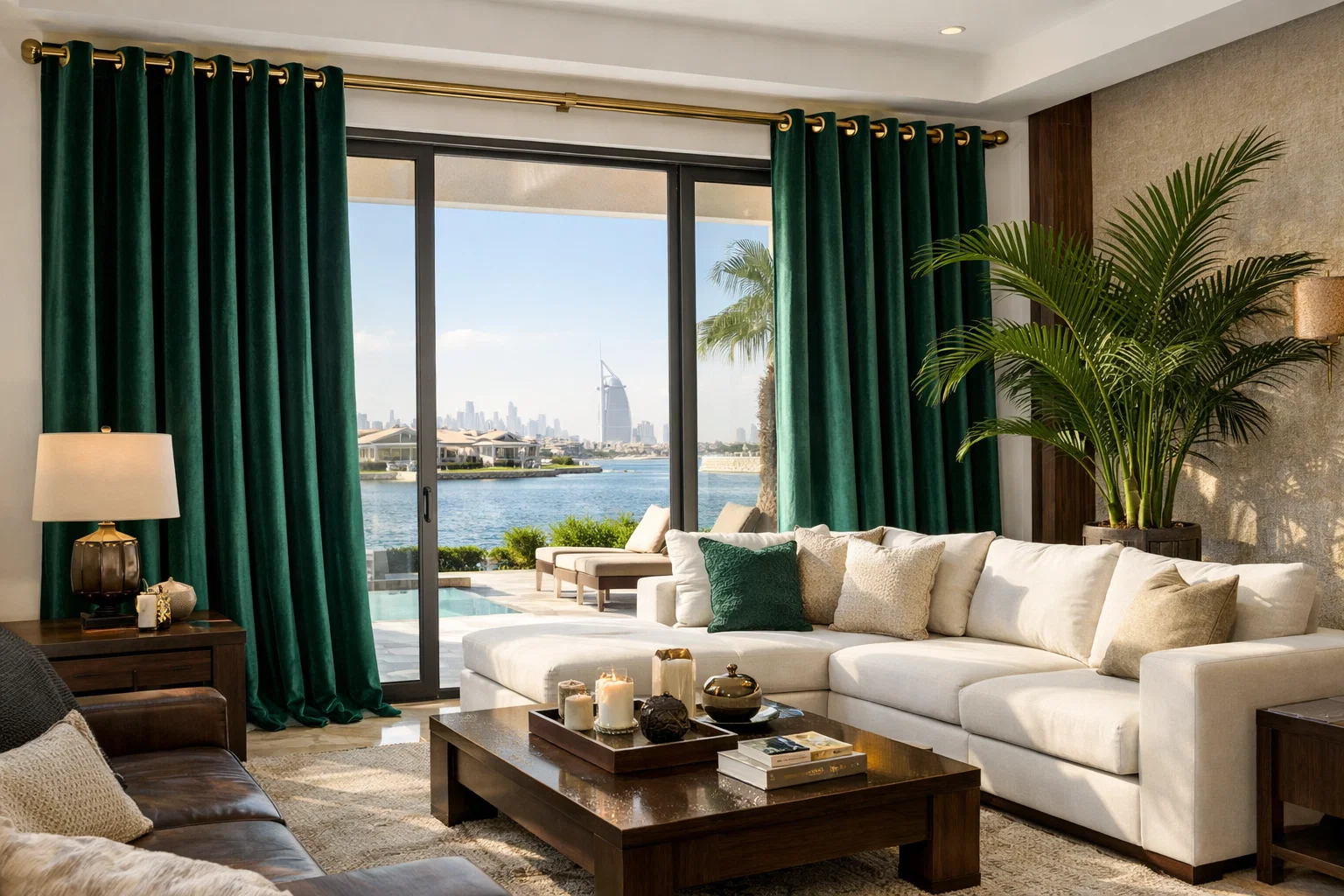
The heading style is one of the most important decisions in curtain specification — it determines the silhouette, the track requirements, the opening movement, and how much fabric you need. It's also one of the most commonly under-specified choices: many buyers focus on fabric and colour while selecting a heading almost by default. This guide fixes that.
Why Heading Style Matters More Than People Realise
The heading is where the curtain meets the track — but its influence extends far beyond that junction:
- Silhouette: The heading controls how the curtain looks when drawn open (the stack) and how it falls when closed (the drape profile).
- Track requirement: Wave headings require a wave-specific track; eyelet curtains use a rod; pleat headings use a standard hook-and-runner or curtain tape system. Getting this wrong at the installation stage is expensive to fix.
- Fabric fullness: Different headings require different fabric-to-window ratios. Pinch pleat typically requires 2x to 2.5x the window width; wave heading typically 2x; eyelet 1.5–1.8x. This directly affects fabric cost.
- Ceiling height: High ceilings (3m+) in Dubai villas and apartments suit wave and pleat headings that create a floor-to-ceiling column effect. Eyelet curtains on high ceilings can look proportionally thin unless heavily fullnessed.
Eyelet Curtains
Eyelet curtains have metal rings punched directly into the top of the fabric header tape. The rod threads through these rings, creating alternating forwards-and-backwards folds when the curtain is drawn closed.
Advantages
- Contemporary, clean aesthetic
- Easy to hang and remove (slides on rod)
- Less fabric required than pleat styles
- Works well with modern interiors
- Relatively lower cost to specify
Limitations
- Not suitable for very heavy fabrics
- Less effective on very high ceilings
- Ring gaps can let light through at top
- Rods are less compatible with motorization
- Fold pattern is less uniform than wave
Best for: Contemporary Dubai apartments with standard 2.5–2.8m ceiling heights. Casual living rooms, guest bedrooms, and any room where ease of removal (for cleaning or seasonal changes) is a priority. Works best with linen, linen-blend, and mid-weight polyester fabrics.
Wave / S-Fold Curtains
Wave curtains (also called S-fold) use a specialist glider track and curtain tape with pre-spaced glider pockets to create a continuous, uniform wave profile across the full width of the curtain. Unlike eyelet or pleat headings, the wave profile is controlled by the track — not the fabric.
Advantages
- Hotel-quality, architectural appearance
- Perfectly uniform wave when closed
- Ideal for motorization (smooth, consistent movement)
- Works beautifully on high ceilings
- Clean visual at ceiling level (no rod visible)
Limitations
- Requires specific wave track (not standard curtain track)
- Higher track cost than rod/standard systems
- Not suitable for very heavy velvet
- Pattern misalignment can occur if not correctly specified
- Needs professional installation to achieve the correct wave depth
Best for: Dubai show home aesthetic, new-build apartments and villas with 3m+ ceilings, any installation with motorized curtains, and rooms where a hotel/contemporary-minimalist feel is the design goal. Wave is the fastest-growing heading style in Dubai for good reason — it delivers the cleanest, most architectural result. See our full wave curtains guide for more detail.
Pencil Pleat Curtains
Pencil pleat curtains use a deep tape with multiple cord slots across the full header width, gathered into tight, parallel pleats that resemble a row of pencils when the cords are drawn. The most traditional heading style and the most common globally.
Advantages
- Compatible with standard tracks and hooks
- High fabric fullness (generous, draped look)
- Very versatile — works with almost any fabric weight
- Traditional / classic aesthetic
- Relatively affordable to produce
Limitations
- Less uniform than wave when closed
- Gathers can pull unevenly over time
- More dated aesthetic in modern Dubai interiors
- Not compatible with motorized systems
- Requires even cord-tightening to maintain uniform look
Best for: Traditional or transitional interiors, rental properties (compatible with existing track systems), and rooms where the curtain is primarily functional rather than a design statement. Also suits heavier fabrics on rooms where wave track installation isn't practical.
Pinch Pleat Curtains
Pinch pleat curtains have hand-sewn or machine-sewn pleats at regular intervals — typically every 8–12cm — creating structured groups of two, three, or four pleats pinched together at the base. The result is a more formal, structured appearance than pencil pleat.
Advantages
- Elegant, structured appearance
- The classic pairing with velvet and heavy fabrics
- Pleats hold their shape well over time
- Works on both high and standard ceiling heights
- Formal aesthetic suits dining rooms and master bedrooms
Limitations
- Higher labour cost than other heading styles
- More traditional aesthetic — not suited to ultra-modern interiors
- Not compatible with motorization
- Fabric folds are fixed — less adjustable than tape-based headings
- Requires professional making-up
Best for: Formal living rooms, master bedrooms with velvet or heavy linen, dining rooms, and any space where a classic-luxury aesthetic is the design intent. Pinch pleat paired with heavy velvet or quality linen on a 3m ceiling is one of the most visually impactful curtain specifications available.
Which Heading to Choose — Quick Guide
| Your Priority | Choose |
|---|---|
| Contemporary / hotel aesthetic | Wave / S-Fold |
| Motorized curtains | Wave / S-Fold |
| Casual / relaxed look | Eyelet |
| Easy to hang / remove | Eyelet |
| Formal / luxury rooms | Pinch Pleat |
| Heavy velvet or formal linen | Pinch Pleat |
| Budget-friendly / existing track | Pencil Pleat |
| High ceiling (3m+) | Wave or Pinch Pleat |
Heading & Fabric Compatibility
| Fabric | Best Heading | Avoid |
|---|---|---|
| Sheer / voile | Wave, Eyelet, Pencil Pleat | — |
| Light linen or linen-blend | Wave, Eyelet | — |
| Mid-weight linen | Wave, Pencil Pleat, Pinch Pleat | — |
| Light velvet (200–280 gsm) | Wave, Pencil Pleat | Eyelet |
| Mid-weight velvet (300–380 gsm) | Pinch Pleat, Pencil Pleat | Wave (too heavy), Eyelet |
| Heavy velvet (400 gsm+) | Pinch Pleat only | All others |
Our Most Common Dubai Recommendation
For new-build Dubai apartments and villas: wave heading throughout, on a motorized track in bedrooms and the main living area. The combination of wave's clean architectural aesthetic and motorized convenience is the best overall specification for Dubai's modern residential market. It's what you see in every quality show home — for good reason.