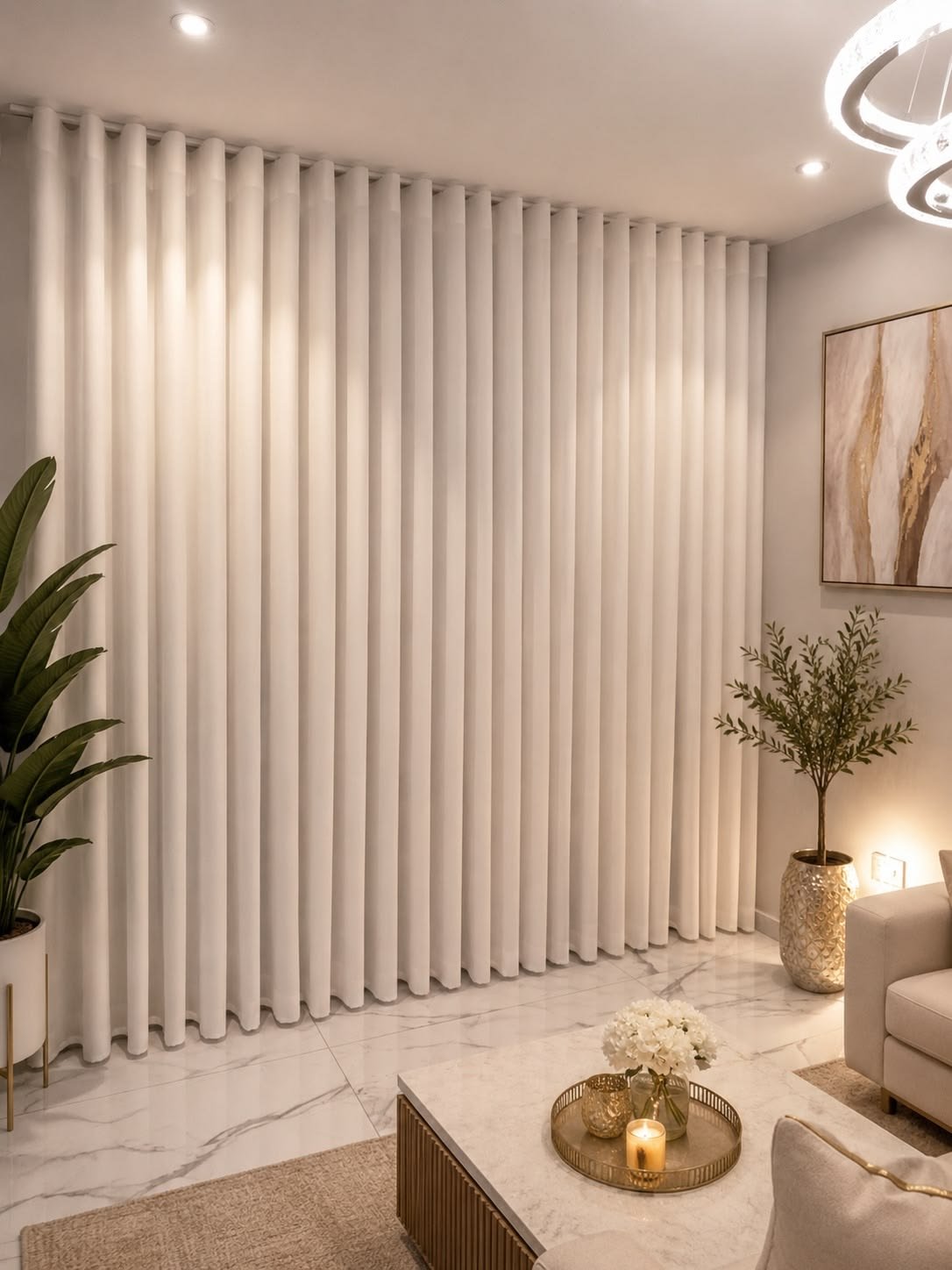
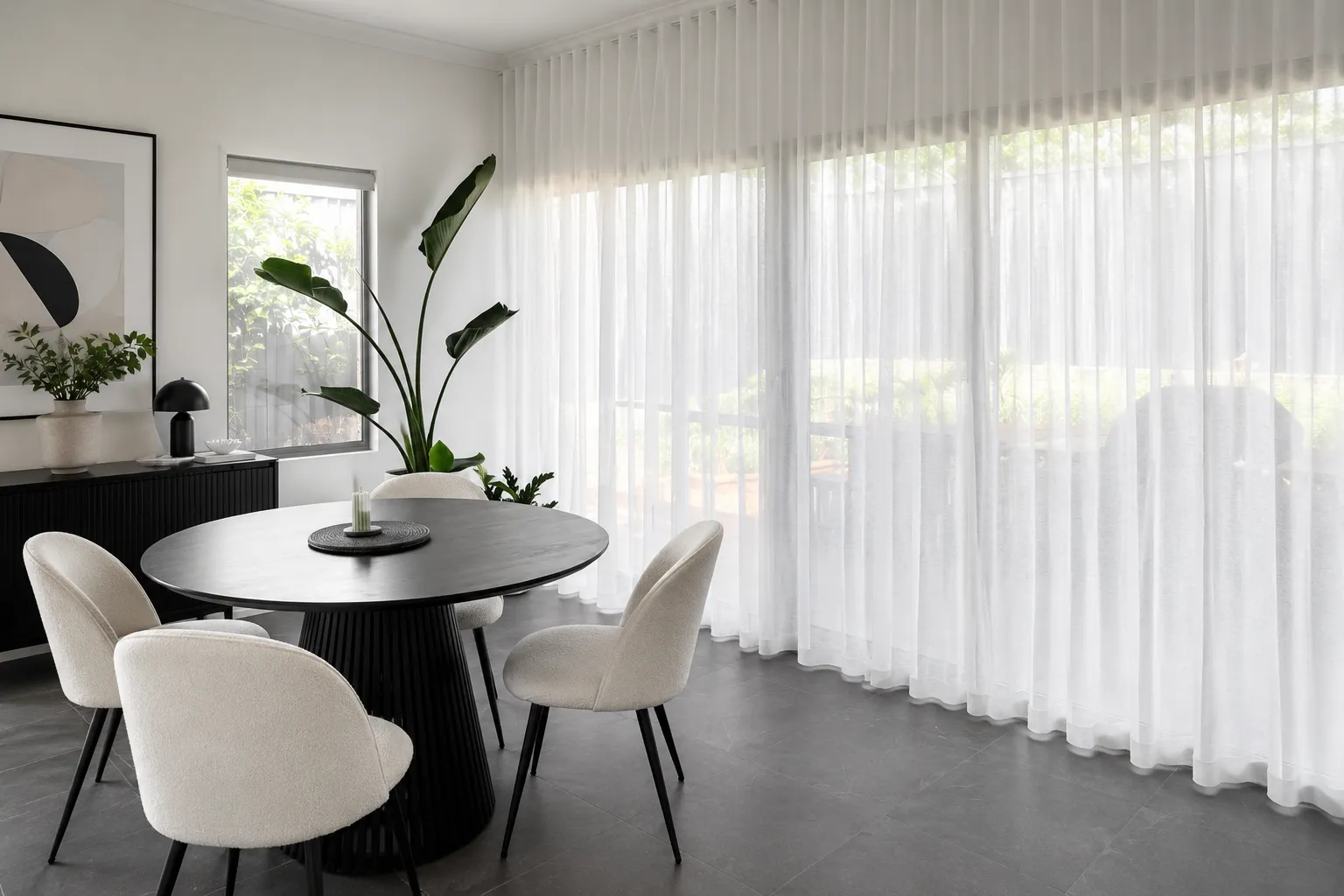
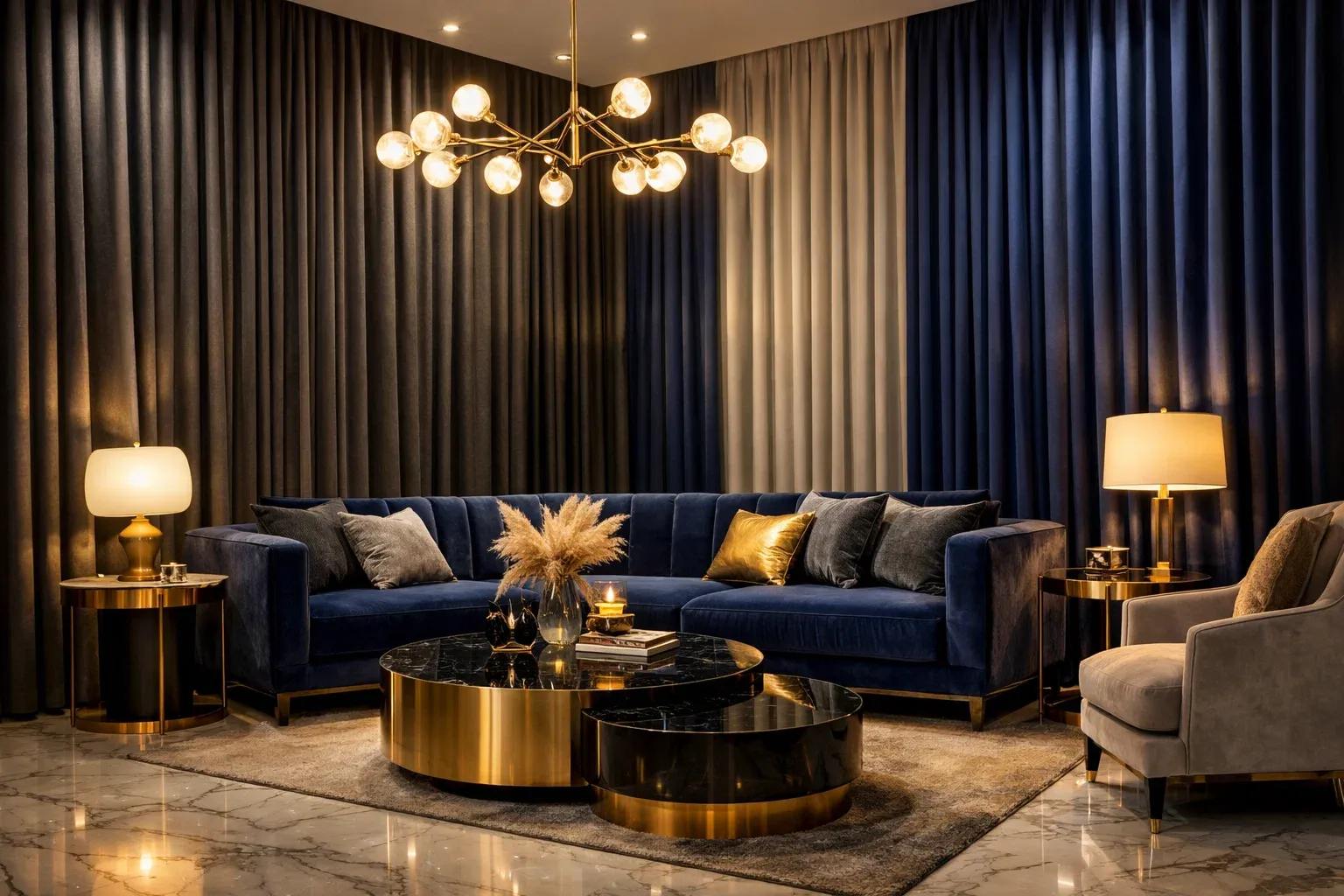
Wave Curtains Dubai — S-Fold Hotel Look, Made to Measure
The S-fold heading you see in every premium Dubai hotel — now made to measure for your home. Uniform ripple folds, specialist wave track, and the cleanest contemporary curtain look available. Free home visit included.
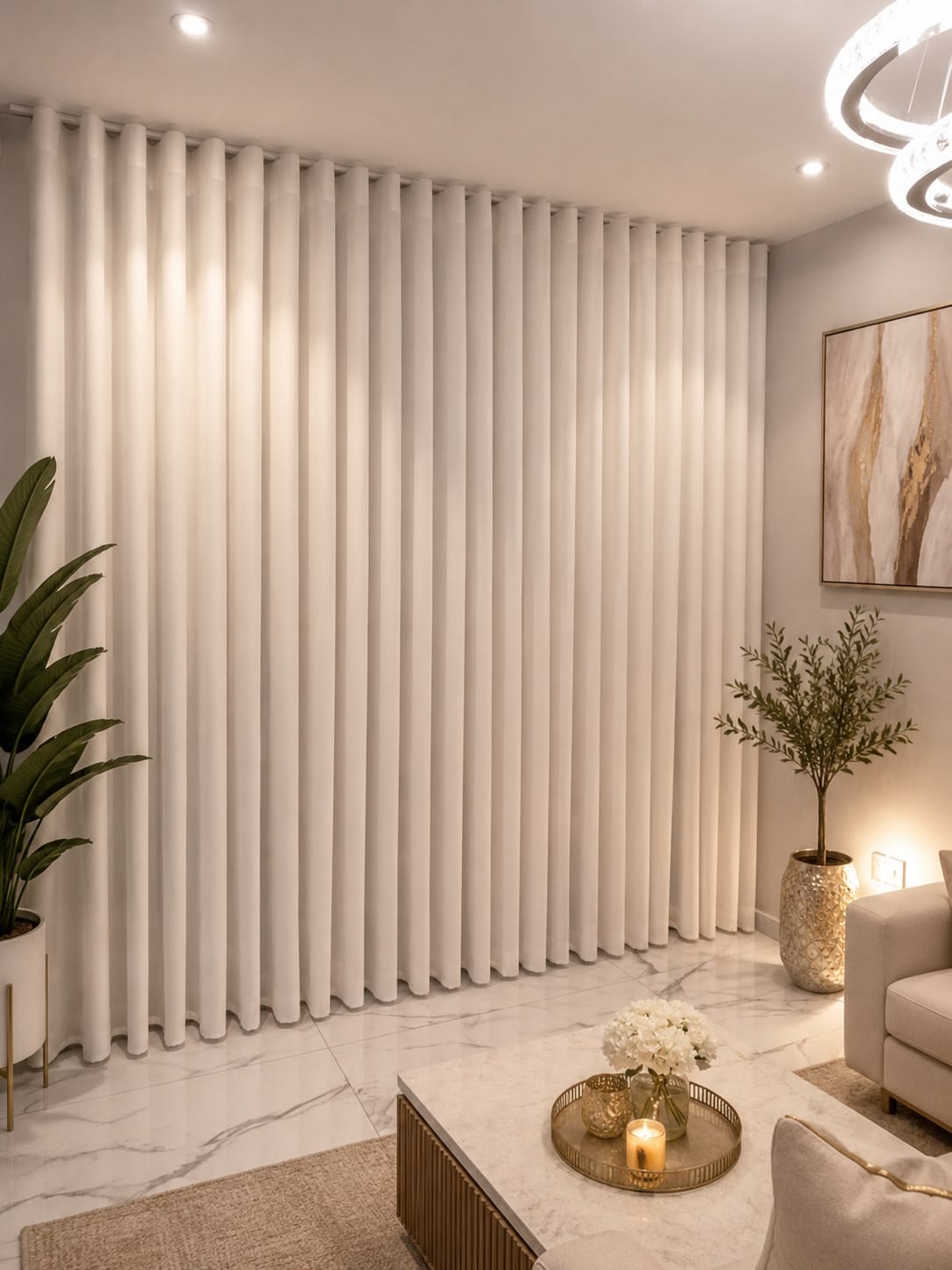
The Contemporary Heading That Changed Dubai Interiors
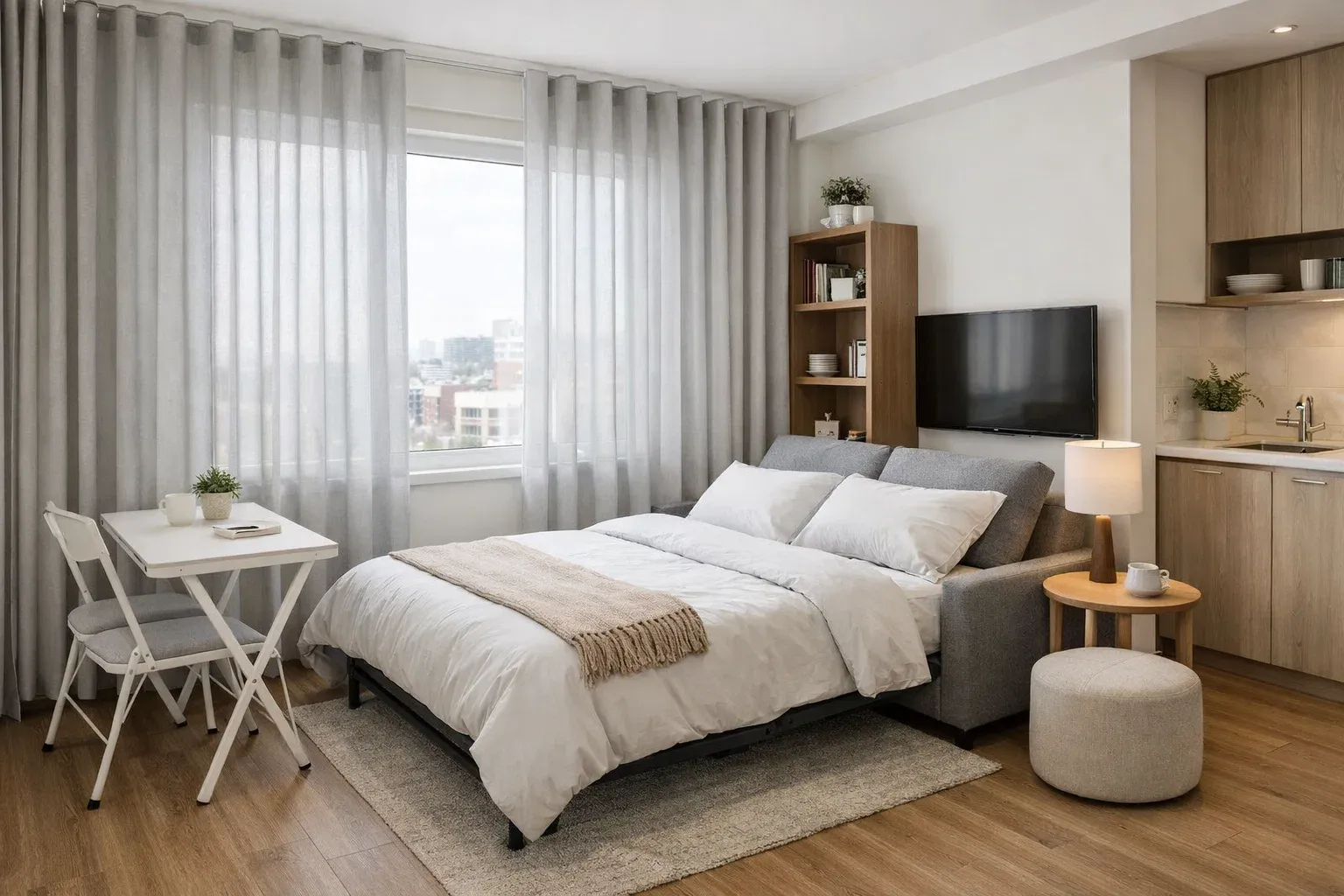
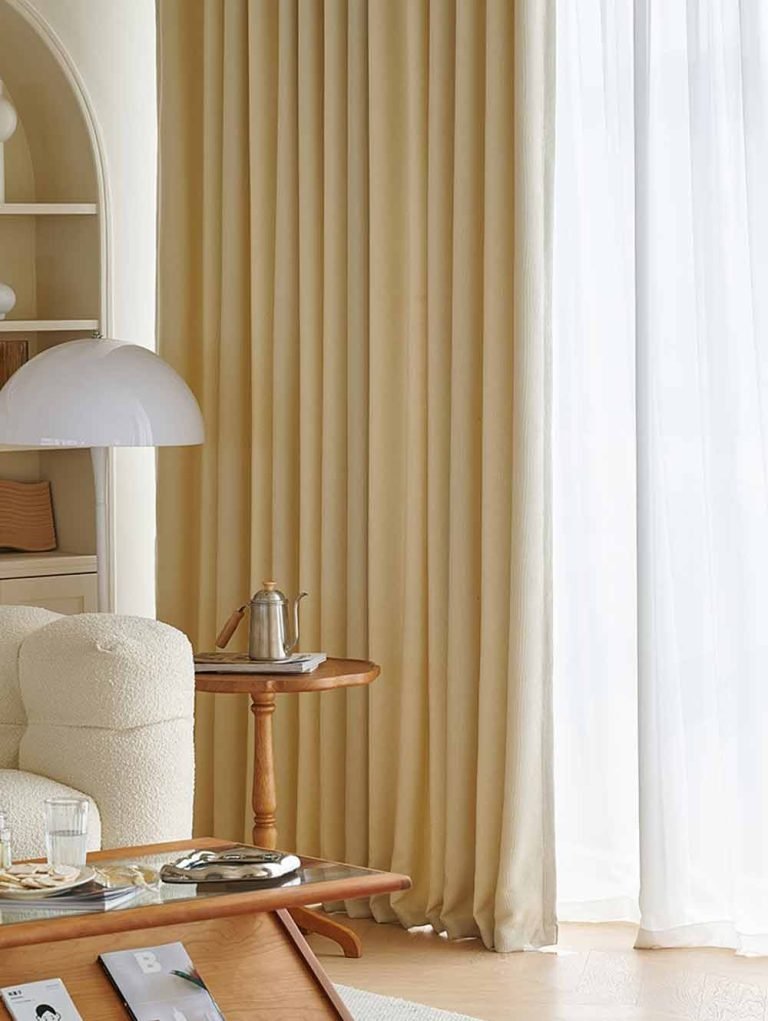
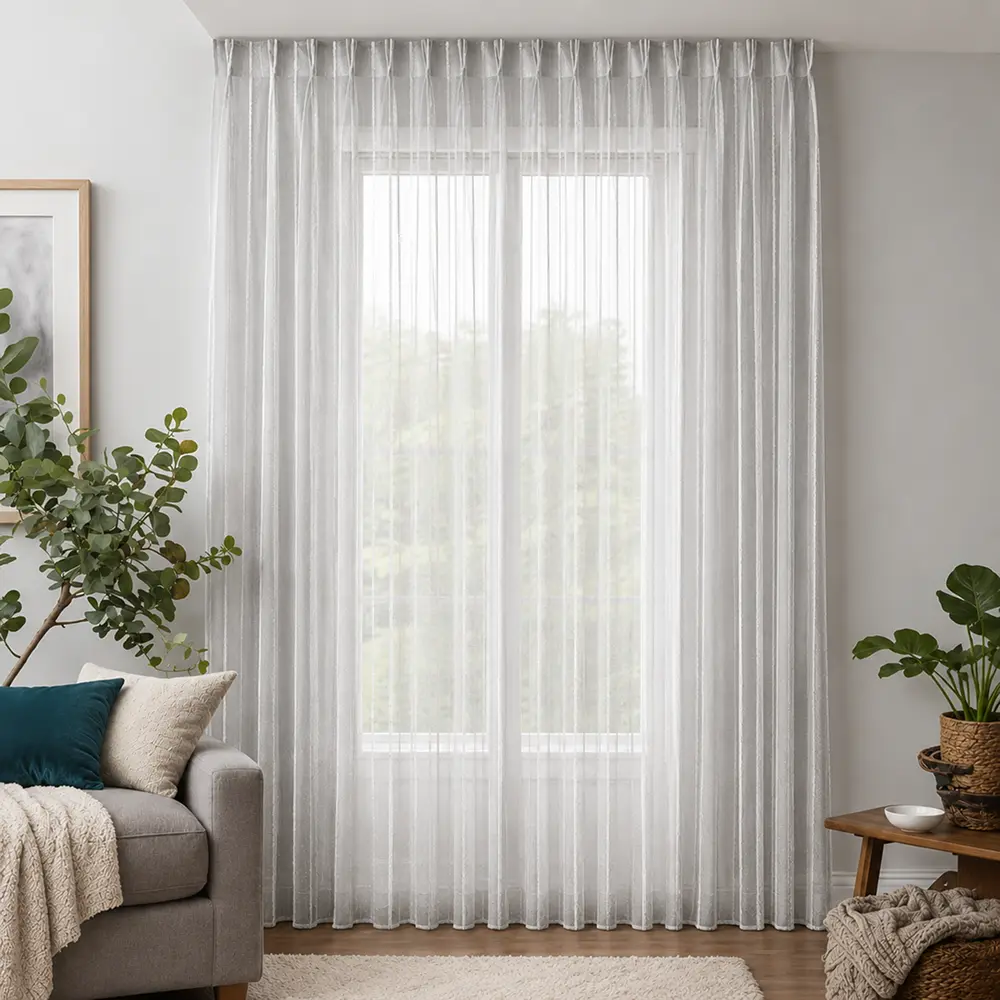
Wave heading (also called S-fold or ripple fold) has become the defining curtain style in Dubai's premium residential market over the past decade. The reason is simple: it creates a perfectly uniform, sculptural ripple pattern that looks architectural rather than domestic. Every Dubai hotel from the Burj Al Arab down uses this heading, and it translates identically into high-end villa and apartment interiors.
What's Included With Your Wave Curtains
Every order includes the correct track hardware, made-to-measure fabric, and professional fitting — all in a single instant digital quote with no hidden charges.
Professional Fitting — Start to Finish.
Wave Curtains Made for Dubai.
Loved Across Dubai.
We had wave curtains fitted in our living room after seeing the look in the Address Hotel. Rex's installation is genuinely identical to the quality I was used to seeing in hotels. The motor integration is perfect.
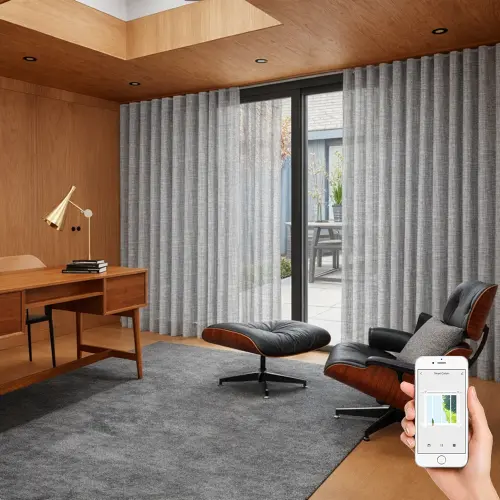
Rex recommended wave heading for our floor-to-ceiling bedroom windows. The result is extraordinary — much cleaner and more architectural than the eyelet curtains we'd had before. Motorised, so we can open them from the app.
I've been trying to recreate the hotel look in our new build. Rex matched it exactly — warm grey blackout linen in wave heading throughout the master and second bedroom. The fitter was meticulous and the installation is perfect.
Wave Curtains — Everywhere We Serve.
Explore Other Curtain Services.
The Complete Guide.
Expert advice from our Dubai fitting team — everything you need to know before you choose.
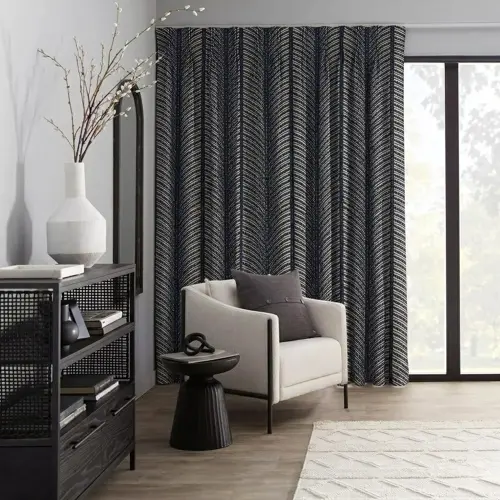
Read Full GuideWave curtains — also called S-fold or ripple-fold — are made by attaching the fabric to a specialist track using carriers spaced at fixed intervals, typically 60–80 mm. The fixed spacing creates a continuous, identical S-shaped fold across the full width of the curtain. Unlike gathered or pleated headings where each fold is slightly different, every wave fold is uniform, giving the curtain an architectural quality that has made it the dominant heading choice for Dubai's new-build apartment market over the past decade.
The track system is as important as the fabric. Wave curtains require a purpose-built wave track — a standard glider or corded track will not produce the characteristic fold. Ceiling mounting, where the track is fixed flush to the soffit with the curtain hanging from full ceiling height, is the preferred specification in Dubai. It eliminates the gap between track and ceiling where light enters, and makes rooms with 2.8m–3.2m ceilings feel taller. Wall mounting is available where ceiling access is restricted, but we recommend ceiling mounting wherever the structure permits. The track profile, bracket spacing, and fixing method are specified at the home visit based on your ceiling material and window dimensions.
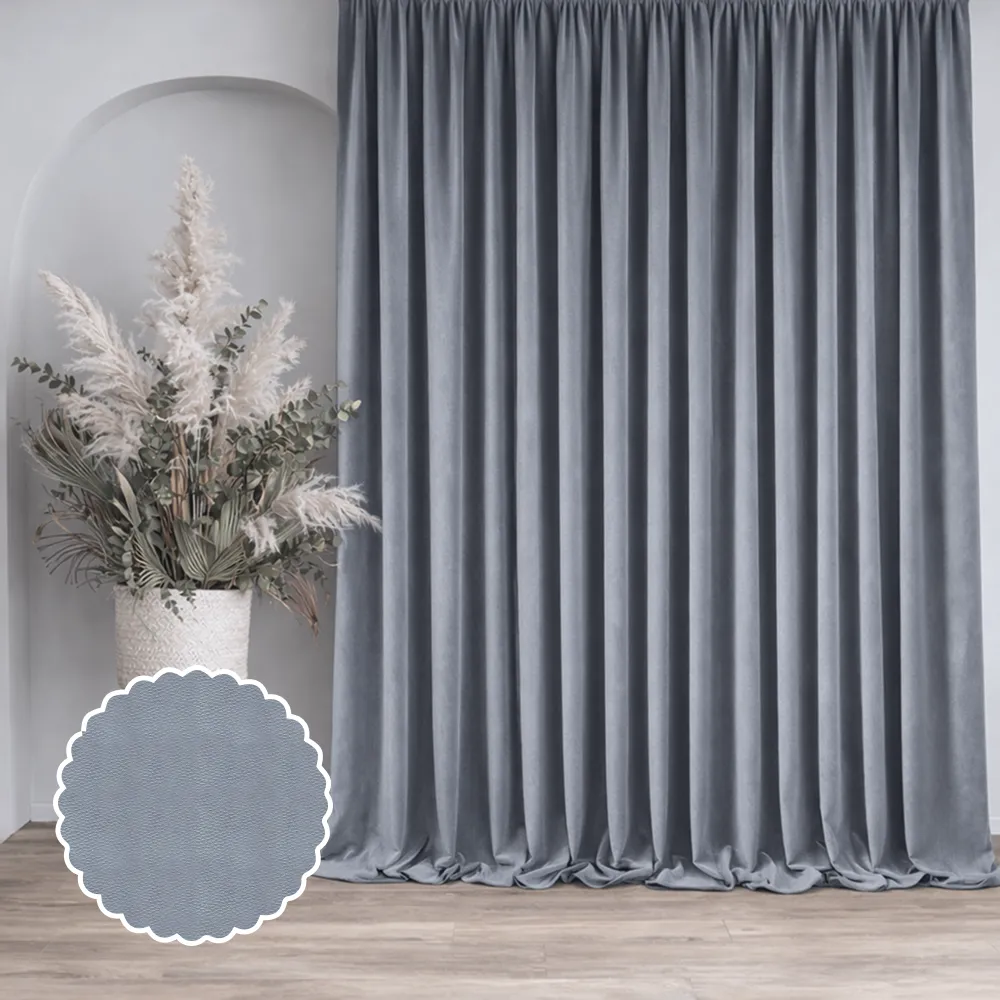
Fabric selection matters significantly for wave heading. Medium-weight fabrics — linen blends, cotton-linen, and light blackout weaves — produce a clean fold with good long-term recovery. Very lightweight fabrics can relax over time and lose fold definition. Very heavy fabrics, such as dense velvet, compress the wave into folds too tight to read clearly. We bring wave fabric samples to your home visit and demonstrate how each option behaves at your actual window width, because the drape in a small cutting looks entirely different from the drape across a full 3-metre panel.
Motorisation is the combination most commonly specified with wave curtains in Dubai. Battery, rechargeable, and mains-wired motors are all available, but the track must be specified as motor-compatible from the outset — the carrier system in a motor-compatible track is different from a manual wave track, and retro-fitting a motor later requires replacing the entire track. If there is any possibility of motorisation in the future, we specify a motor-compatible track as standard regardless of whether a motor is ordered at the time. The cost difference at specification stage is modest; the cost of replacing a fitted and dressed track is not.