

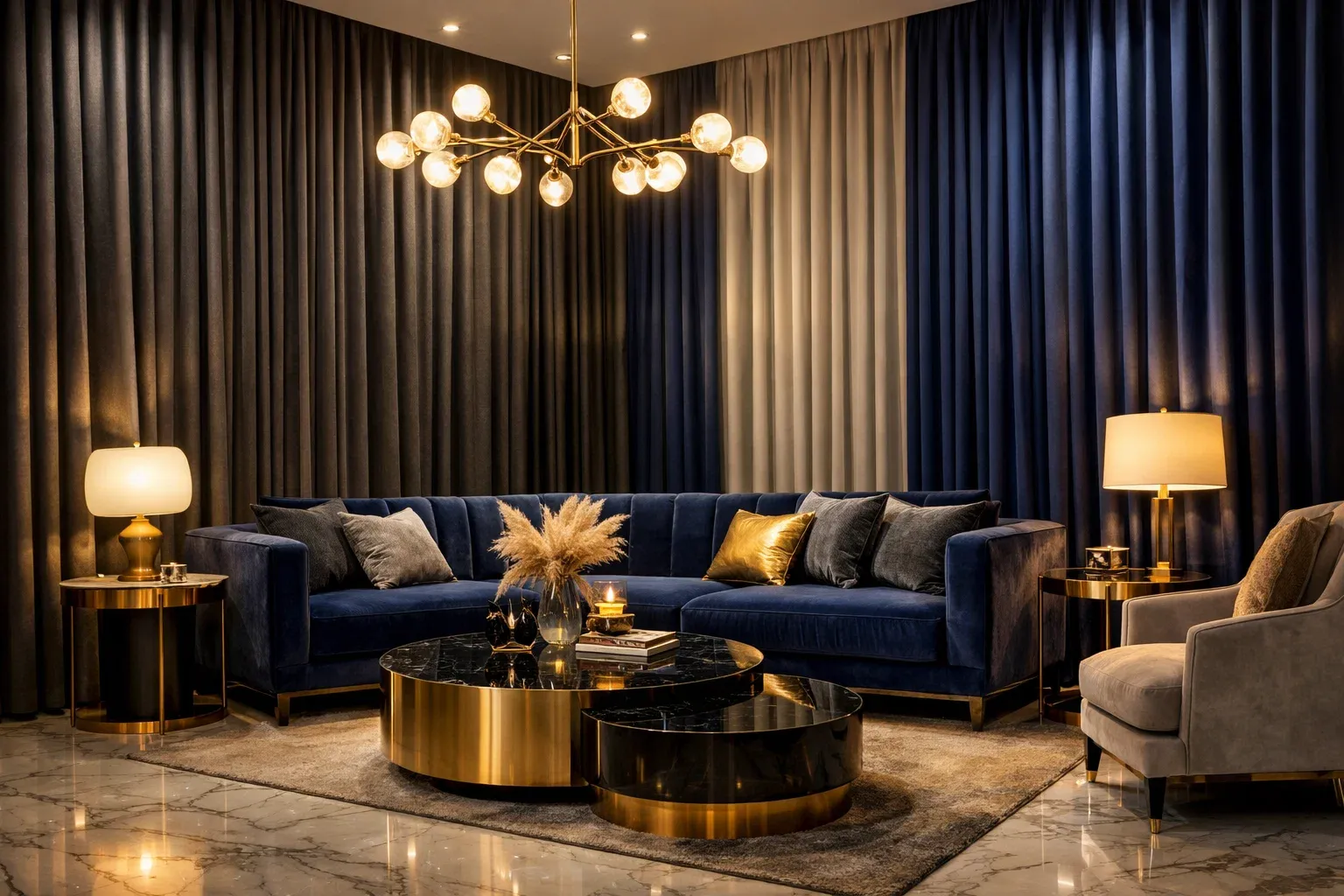
Choosing curtains in Dubai involves decisions that don't apply anywhere else. The climate, the architecture, and the lifestyle create a distinct set of requirements that European or North American curtain guides don't address. This guide covers every relevant decision — fabric, heading, lining, and hardware — with Dubai specifically in mind.
Why Dubai Is Different for Curtains
Three factors make curtain selection in Dubai genuinely different from anywhere else:
- UV intensity: Dubai's UV index reaches 11+ from May to September — among the highest in the world. Fabrics that fade in two years in London fade in six months here.
- Window and ceiling dimensions: Floor-to-ceiling windows and 3m+ ceilings are standard in most post-2010 Dubai developments. Off-the-shelf curtains sized for European homes consistently fall short.
- Air conditioning: Indoor temperatures are maintained at 20–22°C year-round. This changes the acoustic behaviour of rooms (more echo from hard surfaces), the thermal performance of curtains (less relevant), and the fabric feel (velvet feels cool, not heavy).
Fabric Types: What Works in Dubai
Linen — The Most Popular Choice
Linen is the dominant fabric in Dubai's premium residential market for good reason. It drapes naturally, resists static (meaning less dust accumulation), and works in every room from bedroom to living space. UV-stabilised linen is available that won't fade despite south and west-facing window exposure. Learn more about linen curtains in Dubai →
Sheer / Voile — For Daytime Privacy
Sheer curtains solve a specific Dubai problem: in high-density developments, your windows face directly into other apartments. Sheer fabrics provide daytime privacy while still passing natural light — critically, they appear opaque from outside even in bright conditions, while remaining translucent from inside. Explore sheer curtains →
Blackout — Essential for Dubai Bedrooms
Dubai's June sunrise occurs at approximately 5:28am. Without genuine blackout curtains (not "room-darkening"), sleep quality suffers significantly in the summer months. Blackout lining can be added to any outer fabric — linen, velvet, or printed — giving you both the aesthetic you want and the performance you need. Read about blackout curtains →
Velvet — Not Too Hot in Dubai
The common objection to velvet in a hot climate doesn't apply in Dubai. Air-conditioned interiors at 20–22°C mean velvet feels cool to the touch year-round. What velvet provides in Dubai that nothing else does is acoustic mass — in marble-floored apartments with minimal soft furnishings, velvet curtains make a measurable difference to room reverb. Velvet curtains Dubai →
Heading Styles: Which Is Right for Your Space?
The heading is the top part of the curtain — it determines how the fabric gathers and what the curtain looks like when open and closed.
Wave (S-Fold) — The Hotel Look
Wave heading is the most popular in Dubai's premium developments. It creates a uniform ripple pattern that looks architectural and contemporary — identical to what you see in every premium Dubai hotel. Wave requires a dedicated wave track and works particularly well with motorisation. Wave curtains guide →
Eyelet — Clean and Versatile
Eyelet heading uses metal rings to slide the curtain on a standard pole. The result is a clean, evenly-spaced fold that works with every fabric and slides effortlessly. The most popular heading for Dubai apartment bedrooms. Eyelet curtains guide →
Pinch Pleat — Classic and Formal
Pinch pleat creates structured, formal pleats at regular intervals across the heading. More traditional in look than wave or eyelet, it works best in formal dining rooms and living spaces where a classic style is appropriate.
Motorisation: When Is It Worth It?
In Dubai, motorisation crosses from luxury to practical when your windows exceed around 2.5m wide. At that size, a curtain weighs enough to require significant force to operate manually. At 4m — standard for Dubai living room windows — motorisation is the most functional solution.
Battery and rechargeable motors work without any wiring — they retrofit to your existing track. Wired motors are for new builds. Both integrate with Alexa, Google Home, and Apple HomeKit. Full motorised curtains guide →
Made to Measure vs Ready-Made
The price gap between made-to-measure and furniture-store ready-made curtains is smaller than most people expect — and the quality gap is larger. Dubai's non-standard ceiling heights (2.8m–3.4m in most post-2010 developments) mean that "250cm drop" ready-made curtains consistently fall short. Made-to-measure curtains are cut to your actual ceiling height and arrive ready to hang without alteration.
Our made-to-measure curtains start from AED 55/window for sheer fabrics — comparable to mid-range ready-made from furniture retailers, and significantly better quality. Made-to-measure curtains →
How to Choose: A Room-by-Room Guide
- Master bedroom: Blackout lining is essential. Linen + blackout is the most popular combination. Wave or eyelet heading based on your preference.
- Living room: Sheer day-curtain + linen or velvet evening curtain on a double track. Wave heading for premium look. Motorisation recommended for windows above 3m wide.
- Children's rooms: Genuine blackout (not room-darkening). Durable, washable fabric. Eyelet heading for easy operation by children.
- Study/home office: Sheer or linen — glare control without blocking light. UV-rated fabric for south-facing windows.
- Dining room: Linen or velvet with a more formal heading (pinch pleat or wave). The room is used more in the evenings, so light control is less critical than look.
The Single Most Important Tip
See every fabric in your own home before ordering. The same linen swatch looks completely different in a north-facing Dubai Marina apartment than in a south-facing Dubai Hills villa. Our free home visit brings the full fabric range to you — this alone prevents more curtain mistakes than any guide can.