

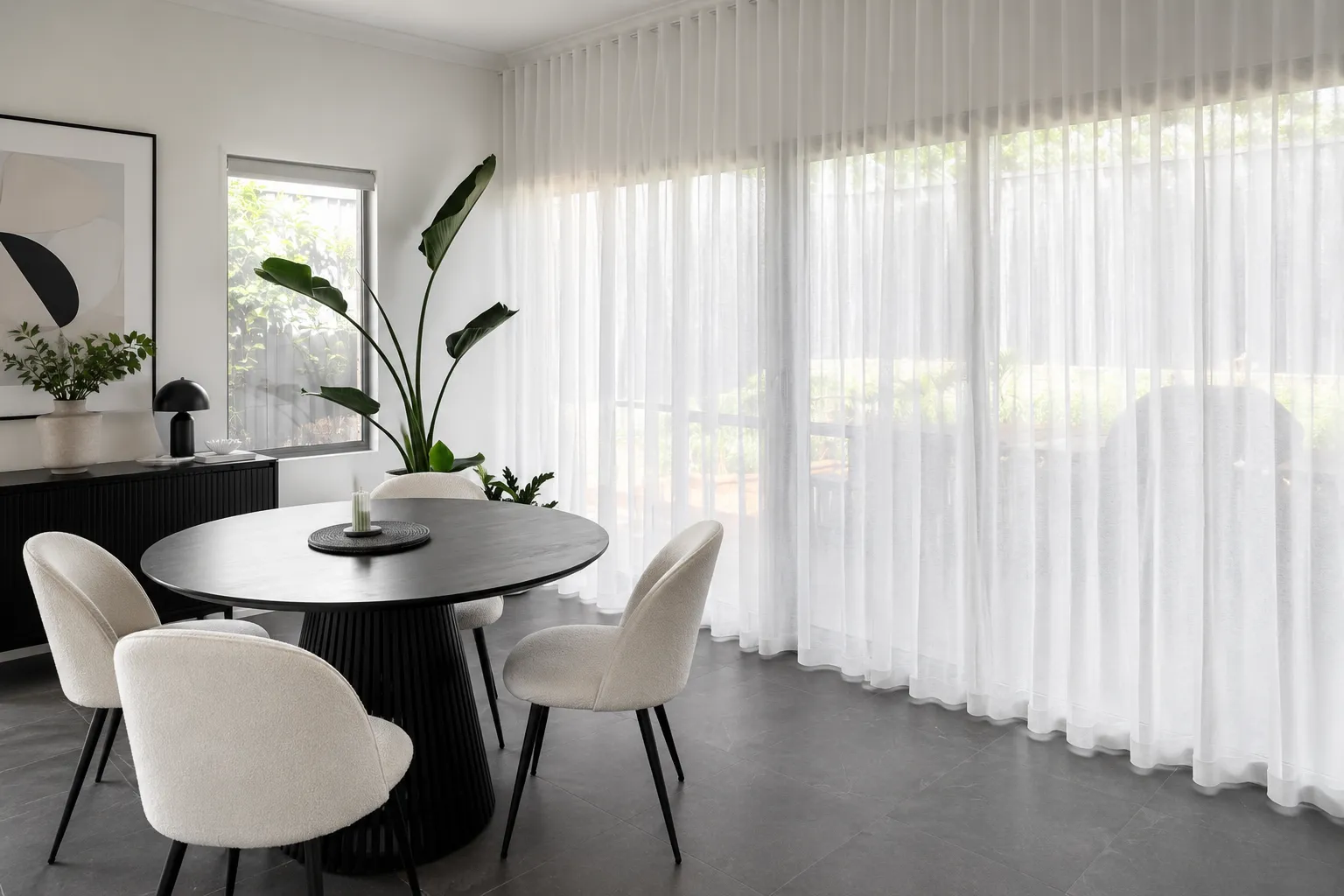
Curtain fabric guides written for a European or American audience don't translate well to Dubai. The climate, living density, and architectural norms here create a different set of requirements — high UV exposure, year-round air conditioning, dust-heavy air, and apartments that often face other buildings directly. This guide addresses fabric selection specifically for the UAE context.
Dubai Climate Factors That Affect Fabric Choice
Before selecting any fabric, understand the specific conditions your curtains will face:
UV Index
Dubai's UV index reaches 11–12 in summer (extreme). Fabrics that appear colourfast in showrooms fade quickly on south- and west-facing windows. Specify UV-inhibiting treatments or fade-guaranteed fabrics for high-exposure positions.
Heat & Solar Gain
Interior temperatures behind unshaded glass can reach 50°C+ in summer. Fabrics need to tolerate this without melting, discolouring, or releasing chemical compounds — relevant for synthetic fabrics (PVC linings, low-quality polyester).
Dust & Air Quality
Desert dust accumulates faster in Dubai than in most global cities. Textured fabrics (linen, velvet) trap dust in their weave. Regular shaking and periodic cleaning is required — or specify smooth, low-texture fabrics for low-maintenance installations.
Air Conditioning
UAE homes run AC for 9–10 months of the year. Curtains that create an effective thermal layer between glass and room significantly reduce AC load and energy bills. Heavier fabrics and blackout linings outperform lightweight sheers for thermal efficiency.
Privacy in Density
Dubai's high-rise density means apartments often face directly into other buildings. Sheer curtains that appear opaque from outside during the day reverse at night (interior lights make you visible). Plan your fabric choice with this in mind for each window.
Humidity (Jun–Sep)
Coastal humidity in summer reaches 80–100%. Natural fabrics (cotton, pure linen) can absorb moisture and develop mildew if curtains remain closed for extended periods with inadequate ventilation. Ensure good air circulation and allow curtains to dry fully.
Sheer Fabrics
Sheer curtains are the most specified type in Dubai — almost every apartment has them as an inner layer. Their primary function is daytime privacy with light transmission.
Voile
The most common sheer fabric. Very lightweight, good light transmission, modest UV filtering. Available in plain white/ivory (the standard Dubai specification) and in patterns. Relatively affordable and easy to wash. Good first choice for most rooms.
Linen Sheer
A more textured, semi-transparent fabric that sits between a true sheer and a light linen. Better UV filtering than voile while maintaining a soft, diffused light quality. More expensive than standard voile but creates a more premium feel. Popular in Dubai villas and larger apartments.
Embroidered Sheer
Voile or organza with embroidered or printed patterns. Strong in formal living rooms and bedrooms. The embroidery adds texture and visual interest without sacrificing the light-filtering function. UV resistance depends on thread type — specify UV-treated embroidery thread for south-facing windows.
Blackout Fabrics
Blackout curtains are essential in Dubai bedrooms — the 5:30am summer sunrise and year-round light pollution from city development make genuine blackout important for sleep quality.
What "Blackout" Actually Means
Blackout refers to the lining or coating, not the face fabric. A velvet curtain, a linen curtain, or a polyester curtain can all be "blackout" if the correct lining is applied. The outer appearance and the light-blocking function are independent variables. Don't feel limited to dark colours for bedroom blackout — any face fabric and any colour can be lined for full blackout.
Blackout Lining vs Interlining
- Blackout lining: A separate layer of blackout fabric sewn to the back of the face fabric. Standard method for most Dubai installations. Blocks 99–100% of light when correctly installed with returnable tracks.
- Blackout interlining: A thick, wadded layer between face fabric and lining. Provides blackout plus additional acoustic dampening and thermal insulation. Best for bedrooms where both darkness and quiet are important.
- Bonded blackout: Blackout material bonded directly to the face fabric. More rigid and harder to clean than lined curtains, but useful for slim-profile installations.
Natural Fabrics — Linen & Cotton
Natural fabrics dominate the premium end of the Dubai curtain market, and for good reason: they tolerate heat without chemical issues, provide real UV protection, and develop a natural appearance that synthetic alternatives can only approximate.
Linen
The most popular natural choice in Dubai. See our full linen curtains guide for a detailed breakdown. Summary: linen-polyester blends offer the best balance of natural performance and practical maintenance for Dubai's conditions.
Cotton
Less common as a curtain fabric in Dubai than linen, primarily because cotton absorbs moisture more readily (relevant in humid summers) and has less inherent UV protection. Cotton percale or cotton-linen blends are used in children's rooms and casual spaces where washability is a priority.
Luxury Fabrics — Velvet & Silk
For formal rooms, master bedrooms, and statement spaces, luxury fabrics add a level of visual quality that mid-range fabrics can't match.
Velvet
Velvet curtains work well in Dubai when specified correctly. Key point: modern curtain velvet is typically a micro-fibre or cotton-polyester construction — much lighter and more heat-tolerant than the heavy velvets associated with old European interiors. See our full velvet guide for room suitability, weights, and care instructions.
Silk & Silk-Look
Pure silk is rarely specified in Dubai — it degrades rapidly under high UV exposure and is difficult to maintain in a dusty environment. Silk-look polyester (dupioni polyester, faux silk) provides a similar sheen at a fraction of the cost and with much better durability. Good for formal dining rooms and guest bedrooms.
Room-by-Room Fabric Recommendation
| Room | Recommended Fabric(s) | Why |
|---|---|---|
| Master bedroom | Linen-blackout or velvet with blackout lining | Full darkness for sleep; premium appearance; thermal efficiency |
| Children's bedroom | Polyester blackout | Washable; durable; full light control at lower cost |
| Living room (inner track) | Voile or linen sheer | Daytime privacy, light diffusion, UV filtering |
| Living room (outer track) | Linen blend or velvet | Evening privacy, thermal layer, visual anchor for the room |
| Dining room | Linen or velvet | Evening use; warmth and texture suit dining lighting |
| Study / home office | Linen sheer or UV linen | Glare control without darkening; supports screen visibility |
| Media room / home cinema | Velvet with blackout lining | Maximum light block; sound absorption; cinema aesthetic |
| Bathroom | Polyester or faux linen (waterproof) | Humidity resistance; easy to clean; avoid natural fibres |
Budget vs Premium — What the Difference Buys You
Dubai's curtain market spans a wide price range. Here's what upgrading actually delivers:
- At AED 55–80 per window: Good-quality voile sheers or polyester blackout. Functional, washable, available in the most common colours. The right choice for rental properties, children's rooms, or when budget is the primary constraint.
- At AED 90–150 per window: Linen-polyester blends, better voile, cotton-look polyester. Noticeably improved appearance and drape. UV treatments start to become standard in this range. The most popular range for Dubai apartments.
- At AED 150–280 per window: Premium linen blends, mid-weight velvet, silk-look polyester. Significant improvement in how the curtain drapes and ages. Better suited to high ceilings (3m+) where heavy-fabric fall matters.
- At AED 280–420+ per window: Heavy velvet, pure linen, custom woven fabrics. For rooms where the curtains are a designed element of the space, not just window treatment. These fabrics repay the investment visually and in longevity.
The Most Useful Thing to Know
The quality of installation matters as much as the quality of fabric. A mid-range fabric on a well-made track, correctly hung to the ceiling and with proper width fullness, will always look better than a premium fabric poorly installed. This is why a free home visit consultation — where we assess your specific windows, ceiling heights, and orientations — is the most valuable step in the process.